
Edgar County Recent Arrests
The Edgar County Sheriff's Department runs the county custody path. Edgar County Jail, in Paris, is the county's documented detention site. An arrest may start with several agencies. The sheriff, Paris Police, Chrisman Police, Kansas Village Police, Illinois State Police, and conservation officers all qualify. The arresting agency keeps the first report, while the jail holds the booking record. The official sheriff page posts no live roster, booking list, or photo feed. Treat any search site claiming otherwise as unofficial until the county confirms it.
There is no public same-day or multi-day arrest window here. For current custody, call the jail at 217-465-4199. For agency direction, call the sheriff at 217-465-4166. County FOIA covers something else. It means a dated request for an arrest report, booking record, custody event, or releasable photograph. Court records open once charges are filed. One empty result never rules out the other channels.
| Window | Status | Fallback |
|---|---|---|
| Same day | No official feed found | Jail, sheriff, Illinois VINE |
| Multi-day blotter | No county archive found | FOIA, court, local news |
| Historical private archive | Unofficial and stale | Agency and court verification |
See Arrests Last 24 Hours for same-day coverage and the Police Blotter for the wider window.
Which Agency Made the Arrest?
The State's Attorney draws the local line. Inside city limits, Paris Police, Chrisman Police, or Kansas Village Police handle the report. County matters in Hume, Grandview, Metcalf, Redmon, and Vermilion belong to the sheriff. That makes the agency name a key search term. Ask the arresting agency for its report. Ask the jail about custody and booking. No single office holds every part. A city arrest does not create a city jail. The 2024 state inspection names Edgar County Jail as the county site, notes it held no detainees for other jurisdictions, and points every search toward a county-focused path with transfers confirmed directly.
Why Edgar Arrest Feeds Are Missing
The sheriff page offers no inmate search, booking table, dated arrest log, or photo policy. No refresh schedule or archive depth is published. Illinois disclosure deadlines for news media do not guarantee a public website. A missing name can mean incomplete intake, a release or transfer, or simply no online interface at all. Call the jail for current custody. Then request older arrest records by FOIA.
Edgar County Arrest Roster Search
Edgar County publishes no online arrest roster. No official portal carries one. A roster, if it existed, would show current county custody rather than a full arrest history, and fields like a booking number, bond, court date, or housing unit must be requested.
| Field | Local status |
|---|---|
| Name, age, charge, agency | Illinois statutory baseline |
| Arrest and custody times | Statutory, subject to withholding |
| Photograph | May exist when taken and releasable |
| Booking number, bond, court date | Request questions, not verified display fields |
Call the jail first. Call the sheriff when the arresting agency is unclear. For a past booking, FOIA needs a full name, a narrow date range, the arresting agency, and each record sought, since a booking photo can exist without ever appearing online.
Edgar Arrest Alerts and Apps
The sheriff lists no booking app. Its app links sit under Child Protection and point to FBI Child ID material. AMBER Alert covers missing children. OffenderWatch handles offender notifications. Social accounts post no promise of every booking. Illinois VINE tracks custody changes, though county participation is unconfirmed; the VINELink Custody Check explains the full path, and the jail phone stays the backup.
Edgar Arrest News Is Secondary
The Prairie Press runs weekly "On the Record" coverage. It covers courts and police activity, not live custody. Its November 2025 issue covered charges, people in custody, pleas, and dispositions. A January 2025 issue counted 71 adults arrested by Paris Police in December 2024. That covers one month and one department. News can be selective or late. It can even describe someone already released. Use the paper for chronology. Then verify custody and outcomes with the jail and the court.
Where Edgar Arrest Records Appear
Official channels come first. The sheriff, jail, and municipal police hold custody and agency records. Fifth Judicial Circuit, the circuit clerk, and Judici cover filed cases. IDOC handles state sentences. VINE may carry custody alerts. The Prairie Press adds news chronology. Mugshots.com holds the only county-local private archive, with date facets from 2011 through 2021 and its own accuracy warning. No Edgar section appears at Arrests.org, RecentlyBooked, Busted Newspaper, or Mugshots.zone. That archive is not current custody.
Recent Arrests by Edgar City
Every city path starts with real police contacts. Paris, Chrisman, and Kansas post no public arrest log, and Chrisman's general alerts are not booking notices.
- Paris Recent Arrests: police reports, county custody, court, and news.
- Chrisman Recent Arrests: police records, FOIA, and county follow-through.
- Kansas Recent Arrests: village police and county jail fallback.
The official Chrisman Police page shows its general alert option.
A broad town alert is not a booking feed.
Edgar County Jail Custody Limits
State inspection paperwork from 2024 traces the jail's construction to 1889 and a 1985 expansion. Total capacity sits at 43. A sheriff association directory says 37 beds. Neither count settles how many beds are usable today. The jail holds no detainees for other jurisdictions. A move to IDOC, federal pretrial custody, or immigration detention calls for a different locator. Release ends current custody but leaves the Edgar County arrest report and case in place.
Edgar County Arrest Record Fields
A booking record documents jail intake after an Edgar County arrest. It is not an incident report. A complaint, court docket, criminal history, and disposition are separate records as well. Illinois law sets the baseline. Expect identity, charges, time and place of arrest, and arresting agency. Received, discharged, or transferred events belong there too, plus a photo when one exists. Booking number, bond, and court date are common asks.
- Booking
- Jail intake after arrest.
- Arraignment
- An early court appearance.
- Bond
- The court’s release decision or terms.
- Disposition
- The recorded case outcome.
- Expungement
- Court-ordered relief when Illinois rules permit it.
Edgar County Mugshots After Arrest
Edgar County posts no official booking photos online. No source sets a display period. A photo may sit in a booking packet, identification file, jail system, or incident report, so ask whether one was taken and whether it can be released. Juvenile, sealed, expunged, investigative, safety, medical, and victim material may be protected. IDOC covers state-sentenced custody, not yesterday's county photo search. An old private image says nothing about present custody.
Request Edgar County Arrest Records
Start at the Edgar County FOIA page. The sheriff posts no separate photo fee or response window. Give a full name and narrow dates. Name the likely agency as well. Request the report, booking file, photo, and custody events separately, and ask for electronic copies. If a file is gone, request its retention authority, and use the clerk only for the filed court case.
Fees vary by keeper. The Circuit Clerk form lists a $6 search fee, extra copy or certification costs, and three to five business days to locate records. The Chrisman FOIA form frees its first 50 standard black-and-white pages, then charges 15 cents per page plus $1 certification. Neither is a sheriff photo fee.
The capture shows why the right custodian and fee schedule must be found first.
Juvenile Arrest Records Stay Protected
Juvenile arrest records stay barred from public inspection under the jail's own inspection terms. State law reinforces Juvenile Court Act confidentiality. A missing youth record is no publishing error. Skip any youth roster, never publish minors, and expect some adult facts withheld too for proceedings, safety, or jail security.
Illinois Arrest and Mugshot Law
Under 5 ILCS 160/4a, listed arrest facts must reach news media as soon as practical and within 72 hours, subject to exceptions. The law demands no gallery or roster. It also restricts some police social-network photo posts for certain lower-level offenses. The statute page shows the source text.
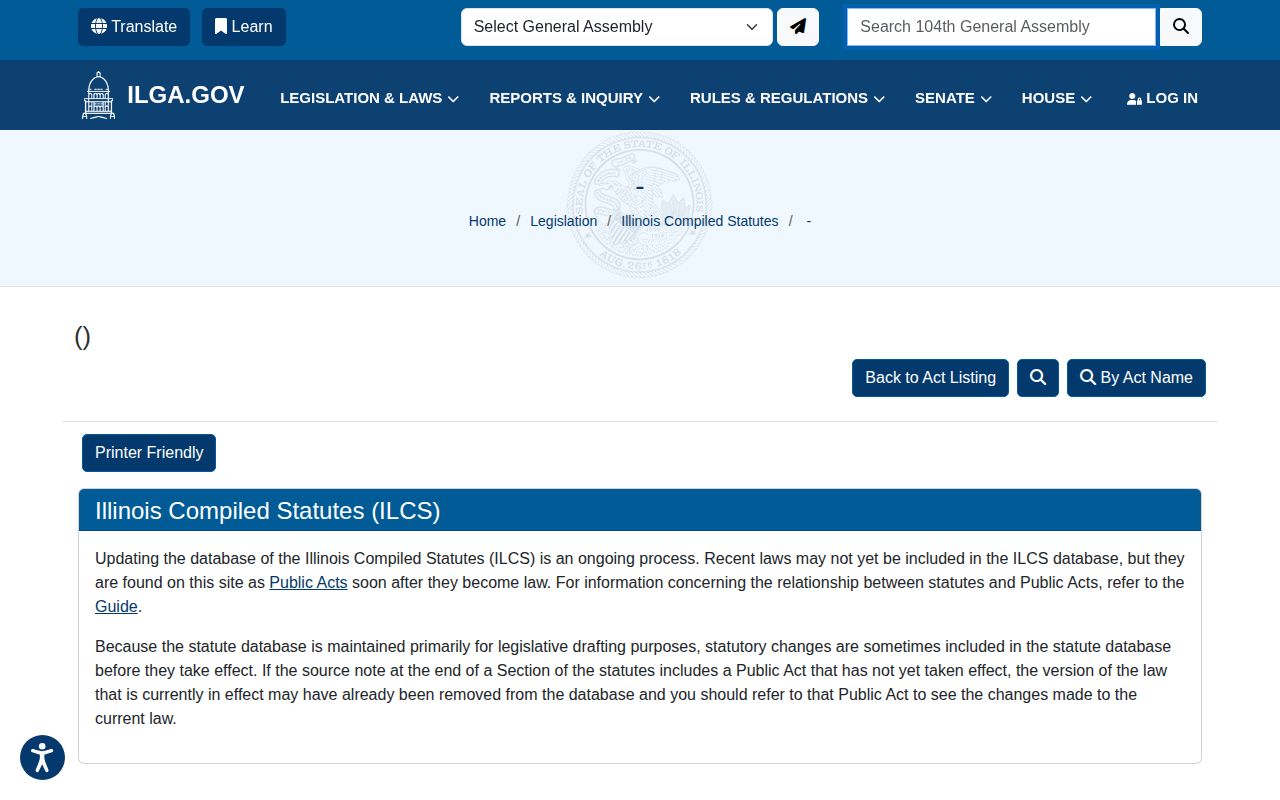
This statute lists no names. 815 ILCS 505/2QQQ bars covered publishers from seeking payment to remove or correct criminal-record material, photos included, but it cannot erase a valid record. A court order is still required.
Clearing an Edgar Arrest Record
Start with Illinois Courts forms and OSAD guidance. Eligibility turns on the case. Then send proof to each holder. Mugshots.com says its update process is free and accepts court documents, though that private policy is no official remedy or endorsement. Never pay for a bare removal promise, and correct the source before asking a search engine to clear an old cache.
Older Edgar Arrest Records
The sheriff posts no retention schedule. Illinois agencies follow approved schedules. Destruction runs through the Local Records Commission. Ask for the applicable series, retention term, and disposal certificate. Booking reports, photos, dispatch logs, and ledgers can be separate. IRAD at Booth Library holds some old county government records but promises no mugshot collection. The clerk remains best for filed cases.
Edgar County Arrest Warrant Checks
The sheriff's office lists no warrant portal, most-wanted page, or tip form, and no posting cadence. OffenderWatch is not a warrant list. Judici is not live warrant confirmation. Check with the sheriff, the court, or an attorney, never approach or detain someone, and call 911 for immediate danger.
After an Edgar County Arrest
Start from the Fifth Judicial Circuit Edgar page for the case path. The clerk keeps criminal files. Judici may show charges, hearings, pleas, judgments, sentences, and dispositions after docketing, and a case can outlast release from jail.
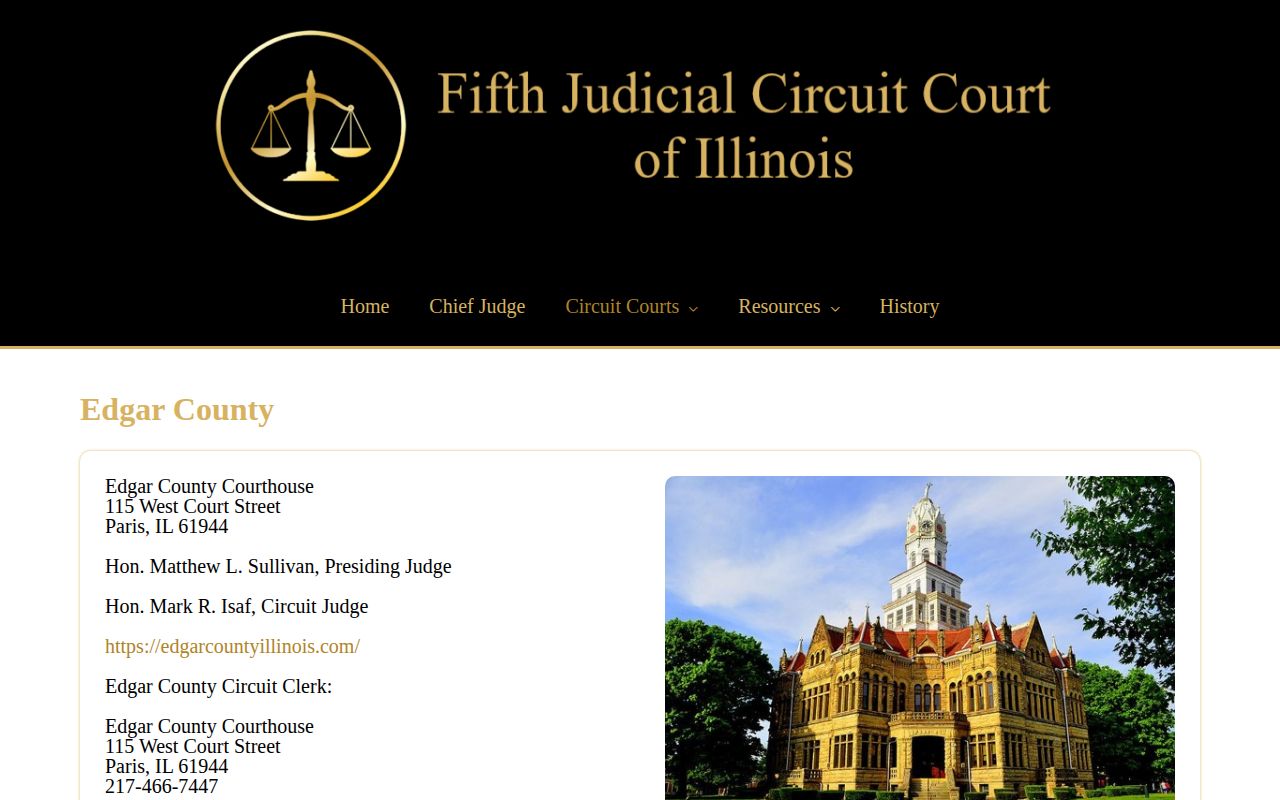
Court pages track follow-through, not current custody. Arrest, booking, first appearance, and disposition are distinct steps, charges may change or be dismissed, and the court record supplies the outcome.
Edgar Arrest Custody Transitions
Different agencies hold different pieces of a person's custody story. The Edgar County jail covers the early hours. Courts take over once charges are filed. IDOC matters only after a state sentence, BOP after a federal one, and ICE handles immigration detention. A release does not erase the trail. Each system keeps its own record. A miss in one tells you nothing about another. Always match identity with more than a name.
IDOC's official search works with a name, an IDOC number, or a birth date, though the agency warns that maintenance can interrupt access, and no photo field is guaranteed. BOP tracks federal inmates from 1982 forward with daily updates, but county and state detainees mostly stay outside it. ICE asks for an A-number plus country of birth, or an exact name and birth date, and excludes anyone under eighteen. USMS frequently controls federal pretrial custody even when the person sits in a contract jail. Every system has a narrow job.
How Edgar Court Records Continue
Judici is a disposition bridge. It is not a fresh-arrest tool. Participating courts may show charges, hearing dates, minutes, judgments, fines, and final outcomes there. The Edgar County Circuit Clerk holds the underlying Circuit Court files. Nothing reaches a docket until it is filed. So court data cannot replace a jail call in the first hours after an arrest. Years later, though, it may still answer questions the jail cannot.
Prairie Press coverage preserves parts of the same chronology from the other direction. Court stories can link charges to pleas or dispositions. A police activity report can summarize a month of department work. Neither carries the completeness or official standing of an agency record. Compare dates with care. An old warrant case, a new booking, a first appearance, and a final disposition can all belong to one person. They may describe very different stages.
Edgar Record Fees Need Context
Fees belong to the office that published them, and borrowing numbers across offices invites errors. Chrisman's form governs only the municipal route it describes. The Circuit Clerk's $6 search fee and location estimate govern court copies. The sheriff publishes no booking-photo charge. So neither figure can stand in as a jail fee. Ask for an estimate first. Request electronic delivery when the record keeper offers it.
Illinois arrest-information law also creates a specific news-media access framework. That framework is not a general promise of free copies or instant online publication. A FOIA officer may apply exemptions, seek clarification, or point you to the true custodian. Precision helps: state the date, agency, record type, and format you want. An agency may deny or redact a record. Keep the written response. It names the cited basis and preserves your request history.
What Edgar Mugshot Law Distinguishes
Photo questions rarely split into a simple public-or-private label. One Illinois statute governs specified arrest information for news media. It includes a photograph only when available. The law permits safety and investigative limits, protects youth confidentiality, and restricts certain police social posts. A separate statute targets publishers that charge money to change or remove criminal-record content. Sealing and expungement move through their own court rules and forms. These are distinct legal tools.
The distinction sets the right order for a disputed image. Get the court disposition, sealing order, or agency correction that fits the facts. Deliver it to the source agency. Give a copy to any private publisher as well. Verify the source page itself. Only then deal with a stale search result. No gallery is needed for that process, and no paid-removal link belongs in it.
Search Edgar County Arrest Records
Match the source to the custody stage. Use the jail for present custody, the arresting agency for its report, the court for the filed case, and state or federal tools after transfer.
Sponsored Results